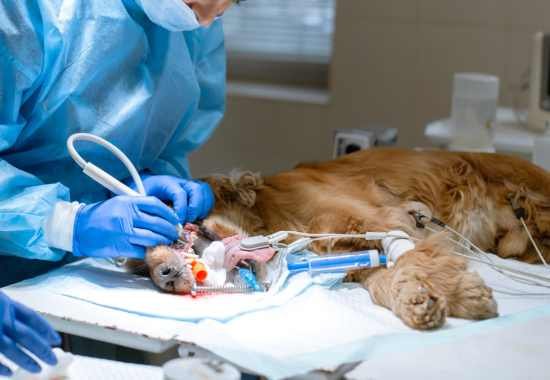
Gateway Veterinary Centre lists routine and advanced surgical services at its Edmonton clinic on Calgary Trail NW. If your pet may need surgery, contact the team to discuss the concern, referral records and an appropriate assessment.
Before a planned procedure, ask which instructions apply to your pet, including arrival time, food and water guidance, current medications and what to bring. Follow the clinic's own instructions rather than general advice from a search result, since preparation varies by procedure and patient.
Surgical-care image published by Gateway Veterinary Centre.
Surgical questions for Rutherford pet owners
Gateway Veterinary Centre's public surgery page says the clinic performs a range of procedures for dogs and cats, including routine spays and neuters, mass removals and soft-tissue surgery. Its services also include separate information about emergency procedures and canine TPLO surgery. Which option, if any, suits an individual pet can only be decided after the veterinary team reviews the history and examination. If another veterinarian has recommended surgery, ask how to arrange an assessment and transfer the records before choosing a date.
A call can help you understand whether the next step is a consultation, a pre-operative assessment, a referral discussion or an urgent visit. Explain what procedure has been mentioned, who recommended it and what questions remain. If your pet's condition is changing quickly, say so at the beginning of the conversation. Do not assume that a page about a procedure confirms eligibility, price or immediate availability; the team needs to review the case and explain what applies.
Before a planned operation
Ask for written instructions covering arrival time, food and water, current medicines, transportation and contact details for the day of surgery. Instructions can differ based on the procedure, age, medical history and clinic assessment, so do not use a general fasting rule from an article or another hospital. If your pet receives daily medication, ask directly whether to give it and how. Make sure the person bringing the animal knows which forms to complete and who is authorized to discuss decisions with the team.
Before the appointment, prepare a list of medications, supplements, allergies, previous anesthesia or procedure experiences and known medical conditions. Include the product name and schedule rather than relying on a vague description. If a different clinic has taken bloodwork or imaging, ask whether those reports should be sent ahead. Tell the team about any change in appetite, energy, coughing, vomiting or other symptoms since the last examination, because new information may affect the plan.
Understand consent, estimates and the procedure plan
A useful consultation should leave you knowing what problem the proposed procedure is meant to address, what alternatives may exist, what uncertainties remain and how the team will decide whether the plan should change. Ask what is included in an estimate, which items could vary and how the clinic will seek approval if additional work is recommended. Gateway provides a quote form on its website, but a written estimate is not a substitute for the veterinarian's explanation of the clinical findings and the options for your pet.
If you do not understand a term, ask for it to be explained in everyday language. You can request a written summary of the procedure, expected monitoring and the next update time. For referrals, ask which veterinarian is coordinating the case and how the referring clinic will be kept informed. It is reasonable to take notes or bring another adult to listen. Do not feel pressured to make a non-urgent decision before you understand the recommendation and the practical steps involved.
Make the home recovery plan before discharge
Before the operation, set aside a quiet place where your pet can rest and where you can observe them. Ask whether stairs, jumping, play, bathing or access to other animals should be limited. The right restrictions depend on the procedure; avoid copying another pet's recovery plan. If you have children or multiple caregivers, share the written instructions so everyone knows what is allowed and who is responsible for medicines and follow-up.
At discharge, confirm the medication names, timing, method of administration and what to do if a dose is missed or refused. Ask how to care for an incision or dressing, when follow-up is due and which changes require a call. If your pet will not eat, seems unusually uncomfortable or you cannot complete part of the plan, contact the clinic rather than adjusting treatment independently. Keep the clinic's contact information and the discharge sheet together until recovery is complete.
Location, referrals and urgent changes
Gateway lists one clinic at 4213 Calgary Trail NW, Edmonton, AB T6J 5P4; the public site does not list a Rutherford branch. Call (587) 557-2210 to confirm current hours, consultation availability and where to send referral documents. If surgery has been recommended elsewhere, ask that veterinarian to include the reason for referral, test results and relevant notes. The clinic's referral form is intended for veterinarians coordinating a case; owners can call the clinic with questions about booking and records.
If an animal scheduled for a routine consultation develops a sudden serious problem, do not wait for the planned appointment. Phone Gateway or an emergency facility, describe the change and follow the instructions you receive. The public site contains different general-hour schedules in separate places, so verify current availability directly. This article explains how to prepare for a conversation; it cannot determine whether surgery is needed or replace the instructions from the veterinary team treating your pet.
Review the estimate and approval process
Before a planned procedure, ask the clinic to walk through the estimate line by line. Clarify which items are expected, which could change after examination or during surgery and how staff will contact you if a different recommendation arises. Ask who can approve an additional step and what happens if that person cannot be reached. These details are practical parts of informed consent. If you need time to consider a non-urgent recommendation, tell the veterinarian and ask what timing is medically appropriate. Keep the written estimate with the discharge information later; it helps you compare the planned care with the final invoice and ask about anything you do not recognize.
Organize recovery for the household
Choose one person to keep the medication schedule and follow-up dates, even if several people help with daily care. Put written instructions somewhere visible, note when each dose is given and record any questions that come up. If children or other animals share the home, ask how to prevent rough play or access to a healing area. Arrange transport for the follow-up before the procedure day if possible. A simple checklist can include the next dose, the next check-in and the clinic's contact number. If the recovery plan becomes difficult to follow, call the clinic early; staff may be able to clarify the instructions or suggest a safer arrangement.
Recovery is part of the treatment plan
At discharge, confirm the medication schedule, activity limits, wound-care instructions and signs that mean you should call. A written plan can help every person in the household follow the same routine. If instructions are unclear at home, contact the clinic instead of changing the plan yourself.
Ask about pre-operative assessment and preparation
Request written recovery and medication instructions
Use the referral form when another veterinarian is coordinating care
Frequently asked questions
Can my veterinarian refer a patient for surgery?
The clinic provides a veterinary referral form. Your veterinarian can contact Gateway Veterinary Centre to discuss the case and the records required.
Can I get a surgery estimate before an exam?
You can ask about an estimate, but the final plan may depend on examination findings and the procedure. Gateway has a quote form for inquiries.
Should I stop my pet's medication before surgery?
Do not stop or change medication without direct instructions from the clinic. Ask about each product before the procedure.
Can my regular veterinarian refer my pet?
Gateway publishes a veterinary referral form. Ask the referring clinic to coordinate records and confirm the next step with Gateway.
Urgent concern? Call the clinic before travelling to confirm availability. The clinic's public homepage and contact page show different general-hour schedules, so confirm today's hours directly.
This information is educational and cannot diagnose or treat your pet. Follow advice from a veterinarian who knows your pet's history. Gateway Veterinary Centre lists one Edmonton location at 4213 Calgary Trail NW; no separate Rutherford branch is listed on the public website.